AI for estate agents: selling with images that deliver what they show
Virtual staging is the sector's most visible AI tool: empty rooms are furnished photorealistically, listing copy comes from the assistant. Both are allowed, with two clear lines: AI visualisations are disclosed as such, Article 50 of the EU AI Act, and the actual condition of the property is never touched. The second line is the harder one.
By Patrick de Kathen, Founder of KlarComply · Reviewed on
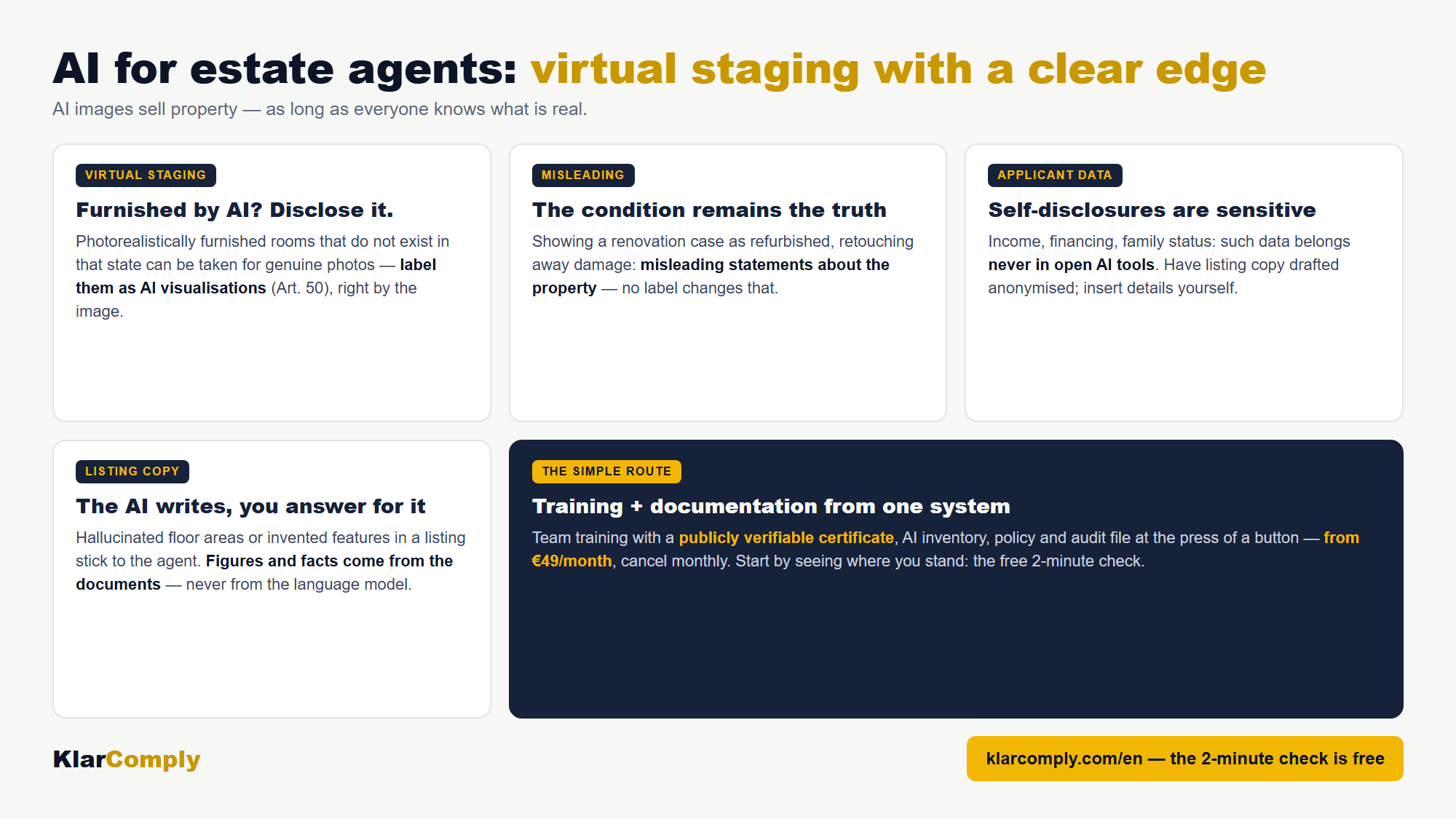
Virtual staging: allowed, but disclose it
A room furnished photorealistically by AI that does not exist in that state can be taken by prospective buyers for a genuine photo, which triggers the disclosure duty of Article 50, in force since 2 August 2026. The regulation's deepfake definition expressly covers places and objects, not only people. Implementation is light: a visible note such as “Visualisation with AI furnishing, room unfurnished” right by the image, in the portal and in the brochure. There is no prescribed form and no official symbol.
The harder line: the condition remains the truth
Labelling permits visualisation, it does not permit whitewashing. Retouching away damp damage, showing a property in need of renovation as refurbished, or altering room proportions makes for misleading statements about the property: with all civil-law consequences up to rescission of the sale. An AI note on the image does not cure that. Rule of thumb: adding furniture yes, changing substance never.
Listing copy: the AI drafts, the documents supply the facts
Language models write persuasive listings, and happily invent details along the way: floor areas, construction years, “freshly refurbished”. Every one of those statements sticks to the agent. The safe division of labour: the AI receives an anonymised bullet list drawn from the verified property documents and drafts from that; figures and assurances are checked against floor plan, energy certificate and title documents before anything goes online.
Applicant data: the quiet risk in daily office work
Applicant self-disclosures contain income, employer, financing range, family status, a data set that belongs in no public AI tool. The AI is happy to draft the friendly rejection to twenty applicants too; then without names and details, which are re-inserted only after the AI. For everything else: business tier with a data processing agreement, or not at all.
The bot on the agency website
A chatbot that pre-sorts viewing requests needs two things: the visible AI notice and tight limits on promises. Whatever the bot promises about commission, availability or property condition is attributed to the agency, a Canadian tribunal decided exactly that in 2024, when an airline's chatbot promised a refund that did not exist.
Three documents that make the agency answer-ready
An AI inventory (which tools, for what, with which data), a short policy (who uses what, how things are labelled) and training records per person. That also answers the question increasingly arriving from network partners, franchisors and commercial clients.
Where to start
Free 2-minute check; for daily operations, training with a publicly verifiable certificate plus the audit file in the subscription from €49/month.
Frequently asked questions
Is virtual staging with AI allowed?
Yes, with two lines: photorealistic AI furnishing is disclosed as a visualisation right by the image (Article 50 of the AI Act), and nothing about the actual condition of the property is altered. Adding furniture yes, retouching away damage never.
May I have listing copy written by AI?
Yes, from anonymised key facts drawn from the verified property documents. Every figure and every assurance is checked against floor plan, energy certificate and documents before publication, the agent is liable for invented details, not the language model.
Where does your company stand?
The free quick check walks through ten points, AI inventory, training status, transparency duties, responsibilities. Two minutes, no sign-up, an honest result and your concrete gaps.
Start the quick check, freeArticle 50 AI Act, transparency obligations
Article 3 AI Act, definitions (no. 60: deepfake)